BIOPORES: High-Fidelity 3D Scaffolds for Organ-Scale Tissue Engineering and Regeneration
Tech ID: 34781 / UC Case 2024-741-0
Background
Biomaterial scaffolds that mimic the natural extracellular matrix are necessary to create an optimal microenvironment for cell adhesion, migration, proliferation, and differentiation. These scaffolds must possess bicontinuous interconnected porosity to ensure the effective exchange of oxygen, nutrients, and metabolic waste, which are crucial for developing functional tissues. However, translating tissue engineering into clinically viable solutions faces challenges when creating functional engineered tissues of appropriate size, with the limited diffusion of oxygen, and due to nutrients and inadequate vascular integration within dense tissue constructs.
Brief Description
Professor Iman Noshadi at the University of California, Rivrside, has developed the BIJEL-integrated PORous Engineered System (BIPORES), a novel biomaterial platform that overcomes the limitations of conventional tissue engineering scaffolds. The BIPORES system is a PEGDA-based material engineered to exhibit an unrestricted, highly bicontinuous interconnected porous framework characterized by uniform pore diameter and optimal surface contour. This technology is potentially advantageous because the distinctive structural characteristics of these PEGDA‐BIPORES‐based biomaterials promote cell homing, attachment, infiltration, proliferation, differentiation, and tissue integration without immune reaction.
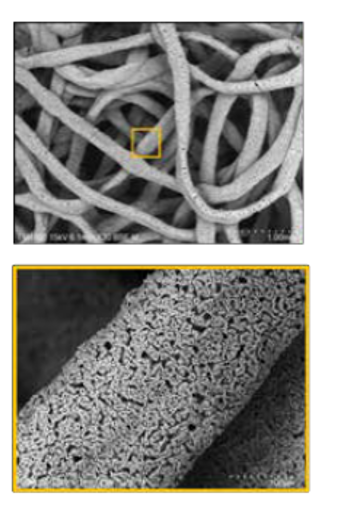
Fig. 1: Scanning electron micrographs of the UCR BIOPORES porous meshwork. Arrangement of the fabricated multi-fibrous scaffolds is shown (top)along with the characteristic bicontinuous interconnected porous ultrastructure (bottom).
Suggested uses
- Thick, vascularized patches for tissue repair for conditions like myocardial infarction.
- Customizable scaffold for culturing and delivering various stem cell and progenitor cell populations for general tissue engineering applications such as liver, bone, and neural tissue repair.
- For the creation of complex, large-scale 3D in vitro tissue models (e.g., organoids or tissue chips) for pharmaceutical research, toxicology, and personalized medicine.
Patent Status
Patent Pending
Related Materials
Contact
- Grace Yee
- grace.yee@ucr.edu
- tel: View Phone Number.

Other Information
Keywords
Bicontinuous Interconnected Porosity, Tissue Engineering, Regenerative Medicine, PEGDA, BIJEL, hiPSCs, Cardiac Cells, 3D Scaffold, Organ-Scale., stem cells

